
You Paid Off the Car and the Premium Stayed the Same
You made the final payment. The title arrived. The renewal notice came two months later with the same premium and the same line items: collision, comprehensive, liability. Nothing changed because you did not tell the carrier to change it, and the carrier has no reason to prompt you. Full coverage continues by default until you act.
For many California retirees, that default costs more than the protection justifies. A 12-year-old sedan with 140,000 miles carries a book value around $4,200. Collision coverage on that vehicle costs roughly $35 to $50 per month depending on your deductible and zip code. Over two years you pay $840 to $1,200 for a policy whose maximum payout is $4,200 minus your deductible. If you never file a claim, you spent a quarter of the car's value insuring against a loss the car cannot exceed.
Compare rates from carriers that specialize in senior drivers
Mature driver discounts, low-mileage rates, and coverage reviews — see what you're actually eligible for.
Get Your Free QuoteCalifornia Minimum Property Damage Liability
$15,000
California requires $15,000 in property damage liability per accident under state minimums. That figure protects the other driver's vehicle in an at-fault accident, not yours. Your own vehicle damage is covered by collision if you carry it, or paid out-of-pocket if you drop it.
California Vehicle Code bodily injury and property damage minimums
What Full Coverage Protects and What It Does Not
Collision pays to repair or replace your vehicle after an accident, minus your deductible, up to the car's actual cash value at the time of the loss. Comprehensive covers theft, vandalism, fire, flood, and animal strikes under the same cash-value ceiling. Both coverages stop protecting you the moment the repair cost or replacement value exceeds what the car is worth.
Liability insurance does a different job. It pays the other driver's vehicle damage, medical bills, and legal costs when you cause the accident. California's minimum is $15,000 property damage per accident, $30,000 bodily injury per person, and $60,000 bodily injury per accident. Those limits apply regardless of your vehicle's age or value. Liability protects your assets from a lawsuit, not your car from a fender-bender.
The coverage-fit question for a paid-off vehicle comes down to asset exposure. If you caused a serious accident tomorrow, would the other driver's bills exceed your liability limits? If yes, you need higher liability coverage. If your car were totaled tomorrow, would losing its $4,200 value disrupt your finances? If no, collision becomes optional. The two decisions are independent.
Most retirees carry retirement savings, home equity, or other assets a lawsuit could reach. Liability limits matter more after retirement than they did during your working years, even as collision coverage matters less.
The Two-Question Framework for Paid-Off Vehicles
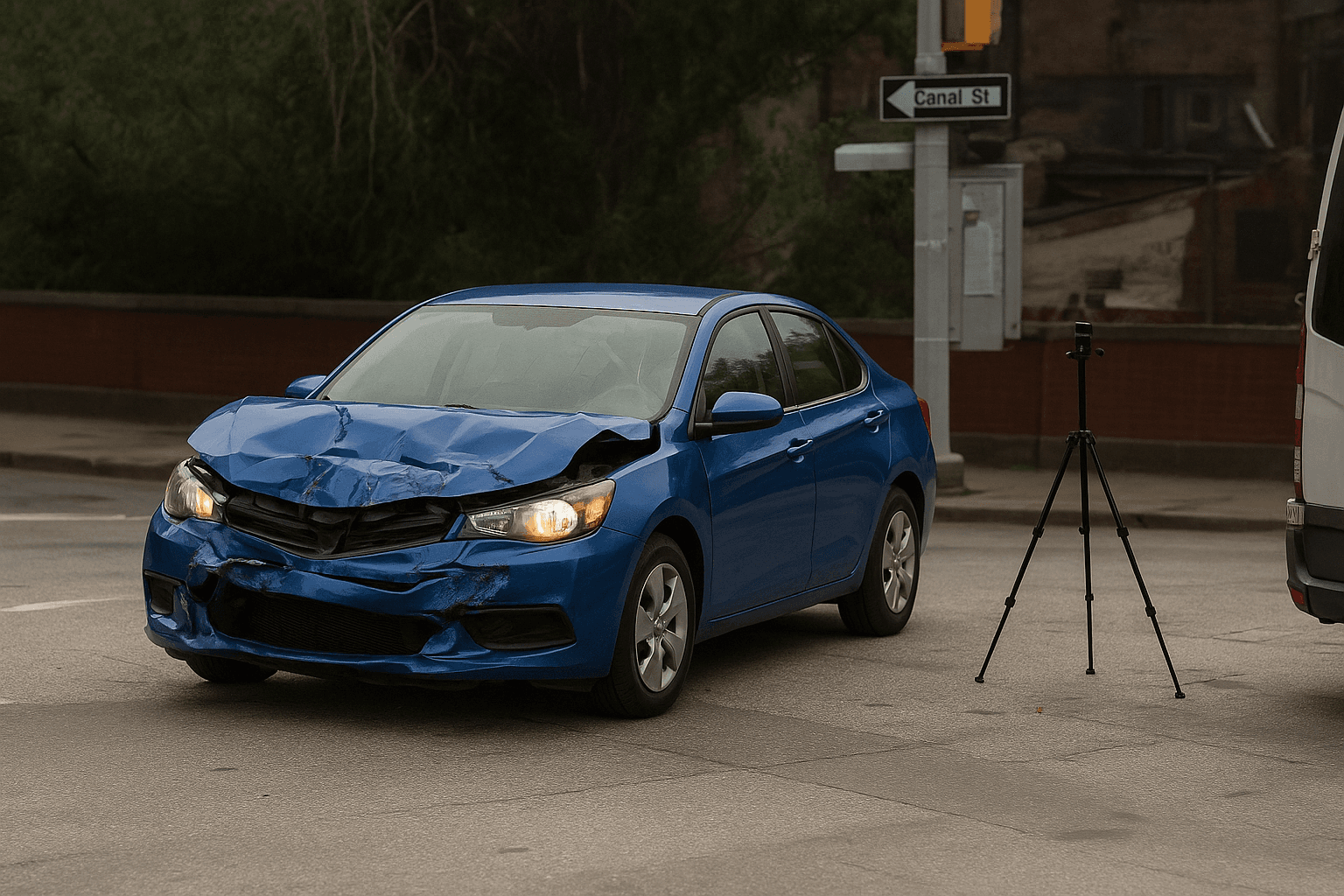
Question one: do your assets exceed your current liability limits? Add home equity, retirement accounts, and savings. California's $60,000 bodily injury limit per accident sounds adequate until you compare it against a two-car collision sending three people to the hospital. Medical bills from a serious accident frequently exceed $100,000 per injured person. If your assets exceed your liability coverage, increasing liability limits to $100,000 per person and $300,000 per accident protects what you spent decades building. That decision has nothing to do with your car's age.
Question two: if your vehicle were totaled, would you replace it out-of-pocket or file a claim? A 12-year-old car with a $4,200 value and a $1,000 deductible pays a maximum $3,200 after a total loss. If $3,200 materially disrupts your budget, keep collision. If you would pay $4,500 for a replacement vehicle from savings without financial strain, collision is paying $600 per year to protect against a $3,200 loss you can absorb. Drop it, bank the premium savings, and self-insure the vehicle.
Related Articles




How Medicare Changes the Medical Payments Decision
Medical payments coverage pays your medical bills and your passengers' bills after an accident, regardless of fault, up to the policy limit. It sits alongside your health insurance and pays before health insurance processes the claim. For working-age drivers with high-deductible health plans, med pay covers the deductible and keeps out-of-pocket costs low.
Medicare coordination works differently. Medicare is primary for hospital and physician bills once you turn 65. Medical payments coverage becomes secondary. If you carry a $5,000 med pay limit and Medicare already paid the hospital bill, med pay reimburses what Medicare did not cover: co-pays, deductibles, and non-covered services. For most accidents, that remainder is small.
Many California insurers offer med pay in $1,000, $2,000, or $5,000 increments. The $1,000 option costs roughly $3 to $6 per month. It makes sense as a co-pay buffer. The $5,000 option costs $12 to $18 per month and duplicates what Medicare already does. If you are enrolled in Medicare, the higher med pay limits rarely justify their cost. Ask your carrier what the $1,000 option costs and drop the rest.
California Mature Driver Discount Age
55+
California Insurance Code Section 11628.3 requires insurers to offer a mature-driver discount to operators age 55 and older. The statute does not fix the discount percentage; each carrier sets the amount in its filed rates. You qualify by age alone, but many carriers increase the discount after you complete a state-approved defensive driving course.
CA Ins. Code §11628.3 (operators 55+; insurer sets percentage)
Which California Carriers Handle Paid-Off-Vehicle Policies Well
Not all carriers price liability-only and reduced-coverage policies the same way. Some impose minimum premium floors that make liability-only quotes uncompetitive even when the coverage itself costs less. Others handle mature-driver and low-mileage discounts inconsistently across coverage tiers, penalizing drivers who drop collision.
Among carriers writing in California, CSAA, Auto Club Enterprises, and Nationwide allow liability-only and liability-plus-comprehensive configurations without minimum premium penalties and apply mature-driver discounts uniformly across coverage levels. State Farm and Travelers offer competitive liability-only rates but apply mature-driver course discounts only after manual review, delaying the discount until the next renewal unless you follow up. Mercury General writes liability-only policies but requires broker involvement for any mid-term coverage change, adding friction most retirees do not expect.
When comparing quotes, request three configurations: liability-only at your current limits, liability-only at $100,000/$300,000 bodily injury, and liability plus comprehensive with collision removed. The second configuration often costs only $8 to $15 more per month than the minimum and closes the asset-exposure gap. The third keeps your vehicle protected against theft and weather damage while eliminating the collision premium. Compare all three against your current full-coverage bill.
What Happens If You Drop Collision and Later Want It Back
You can add collision coverage back to your policy at any renewal or mid-term by calling your agent or logging into your account. The carrier will re-underwrite your vehicle: they will verify the VIN, check the current odometer reading, and may require photos showing the vehicle's condition before the coverage binds. If the car has new damage since you dropped collision, that damage is excluded from coverage. Pre-existing damage is always excluded.
Reinstating collision after a gap does not trigger a surcharge, but the premium will reflect your vehicle's current depreciated value, which is lower than it was when you first dropped the coverage. A car worth $4,200 today may be worth $3,400 in two years. Collision premium drops as the vehicle ages, but so does the maximum payout. The coverage becomes less useful every year you keep the car, which is why most drivers who drop it never add it back.
Get Quotes with the Coverage Configuration That Fits Your Position
Call your current carrier and request quotes for all three configurations: liability-only at California minimums, liability-only at $100,000/$300,000 bodily injury, and liability plus comprehensive with no collision. Write down the monthly premium for each. Then request quotes from two other carriers writing in California using the same three configurations. The comparison takes one afternoon and surfaces whether you are overpaying for coverage you no longer need or underprotected on liability limits that matter more now than they did at 45.
If your assets exceed $100,000 and you are still carrying state minimum liability, fixing that gap is more urgent than any decision about collision. If your car is paid off, worth under $5,000, and you are paying $40 per month for collision, dropping it and raising your liability limits with the savings is the correct trade almost every time.