The Renewal Notice Never Mentions It
Your renewal notice arrived showing the same coverage you've carried since the car was new. Same collision deductible, same comprehensive, same premium climbing steadily despite no accidents and no tickets. The difference now: you sent the final payment three years ago, and the lender released the lien. Nobody from your carrier called to ask whether you still wanted full coverage once the loan requirement disappeared.
Most retirees in Irvine discover this friction the same way: a conversation with a neighbor who dropped collision, a question from an adult child reviewing the household budget, or a sharp increase at renewal that finally triggers the math. The coverage that protected the lender's interest when you owed $18,000 continues unchanged now that the car is worth $6,200 and you own it free and clear. The decision to keep or drop it is yours, but the renewal system treats it as automatic.
Compare rates from carriers that specialize in senior drivers
Mature driver discounts, low-mileage rates, and coverage reviews — see what you're actually eligible for.
Get Your Free QuoteCalifornia Bodily Injury Minimum Per Person
$15,000
California Insurance Code requires $15,000 per person, $30,000 per accident bodily injury, and $5,000 property damage as the liability floor. Retirees dropping collision must maintain liability coverage; the minimum exists regardless of vehicle age or loan status.
CA Ins. Code §11580.1b
What Full Coverage Actually Protected
Full coverage is industry shorthand for a liability policy with collision and comprehensive added. Collision pays to repair your vehicle after an accident you cause or a hit-and-run. Comprehensive covers theft, vandalism, fire, flood, hail, and animal strikes. Both pay up to the car's actual cash value minus your deductible, and both require you to carry them when a lender holds a lien.
The lender's interest ends the day the lien releases. The vehicle becomes an asset you own, and the decision about insuring that asset becomes a financial judgment call rather than a contractual requirement. Liability coverage remains mandatory under California law regardless of what you drive or whether you owe money on it. Collision and comprehensive become optional the moment the loan clears.
Your carrier will continue billing for both unless you call and request removal. The renewal notice does not prompt the conversation. Some agents assume you want continuity; others never reviewed your account after the lien release. The coverage stays on the policy because nobody initiated the change, not because the vehicle still warrants it.
Your carrier will not call to suggest dropping collision when your loan ends. The coverage continues at renewal until you request its removal.
Running the Asset Math
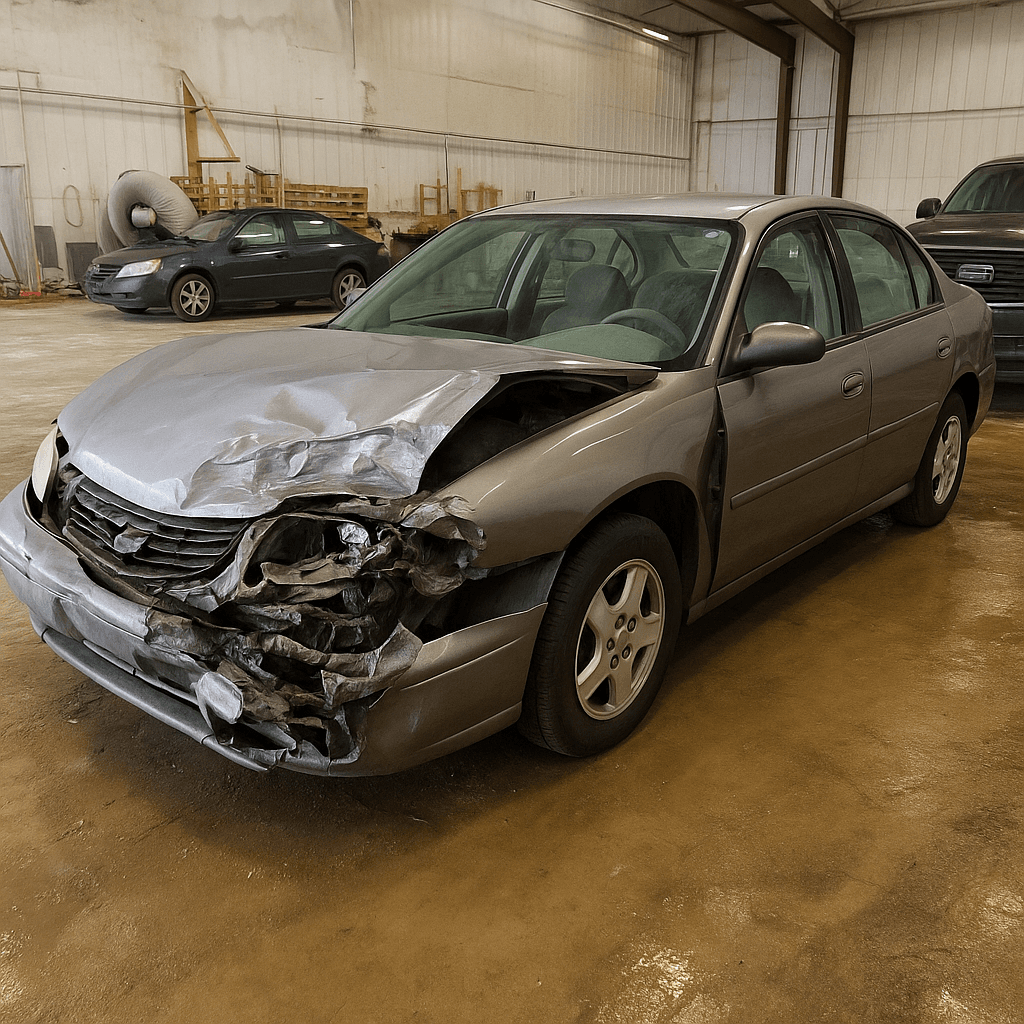
Start with the vehicle's actual cash value, not what you remember paying or what you think it should be worth. Check the private-party value on Kelley Blue Book or Edmunds for your specific year, mileage, and condition. A 2012 Honda Accord EX with 98,000 miles in good condition shows a private-party range around $6,000 to $7,500 in the Irvine market as of current listings. That range is what an insurer would reference in a total-loss settlement before applying your deductible.
Subtract your collision deductible from that value. If you carry a $500 deductible and the car is worth $6,500, the maximum net payout in a total loss is $6,000. If your deductible is $1,000, the net maximum is $5,500. Now compare that figure against the annual cost of collision and comprehensive combined. If you're paying $780 every six months for full coverage and $240 for liability alone, the collision and comp portion costs roughly $1,080 per year. A conventional threshold: if the annual cost exceeds 10 percent of the vehicle's value, the coverage is expensive relative to the asset it protects.
Related Articles




Where the Ten Percent Rule Bends
The ten percent threshold is a guideline, not a mandate, and your position may justify a different answer. Retirees with limited savings and no immediate ability to replace the vehicle out-of-pocket often keep collision longer than the math alone suggests, treating the premium as budget insurance against an unaffordable replacement. Others with comfortable reserves and a second vehicle in the household drop collision the day the loan ends, viewing self-insurance as the better return.
Comprehensive coverage often remains worthwhile even after collision is dropped. It costs significantly less than collision in most California markets, and a stolen vehicle or hail-damaged windshield can exceed what many retirees want to pay from savings. Irvine's relatively low auto-theft rate compared to other Orange County cities makes comprehensive cheaper here, but the coverage still addresses risks unrelated to driving behavior.
Your adult children may press for dropping all optional coverage to lower the household budget. That advice fits when liquid savings exceed the car's value several times over and losing the vehicle would not strand you. It does not fit when the car is your primary mobility tool and replacement would require financing at retirement-age interest rates. The decision belongs to the person whose transportation and savings are at stake.
Carriers Writing Auto Policies in California
25
At least 25 carriers write personal auto policies in California and file rates with the Department of Insurance. Liability-only quotes vary widely by carrier even for identical coverage, and retirees switching from full coverage to liability-alone often find materially lower premiums by comparing three or more carriers rather than staying with their current insurer.
CA DOI licensure data
Mature-Driver Discount Becomes More Visible
California Insurance Code Section 11628.3 requires every admitted auto insurer to offer a mature-driver discount to operators 55 and older. The statute does not fix the percentage; each carrier sets the amount in its filed rates. Most carriers apply the discount automatically based on age once you reach eligibility, but some require you to request it or submit proof of completing a state-approved defensive driving course to unlock a larger percentage.
When you switch from full coverage to liability-only, the mature-driver discount applies to a smaller base premium, so the dollar savings shrink in absolute terms. The percentage remains the same; the base it applies to is lower. Carriers you dismissed years ago as expensive for full coverage may now rank among the cheapest for liability-only once the mature-driver discount applies. Comparing at least three quotes after dropping collision reveals which insurers price liability most favorably for senior drivers in California.
Some Irvine retirees keep collision on one vehicle and drop it on a second paid-off car used only for errands and medical appointments. That hybrid approach makes sense when one vehicle is newer or higher-value and the other is a 2010 Camry worth $5,000 driven 3,000 miles per year. Ask your agent to quote both scenarios: liability-only on both vehicles, and full coverage on one with liability-only on the other. The premium difference will clarify which structure fits your household.
How to Request the Change
Call your agent or carrier and state that you want to remove collision and comprehensive from the policy, effective your next renewal date or immediately if mid-term removal is allowed. The agent will confirm the change, adjust your premium, and issue an updated declarations page showing liability coverage only. Some carriers process the request the same day; others require written confirmation or a signed form.
If you financed the vehicle recently and believe the lien was released but are unsure, check your policy declarations page for a lienholder entry. If that field is blank, the lender released the lien and you are free to adjust coverage. If a lienholder name still appears, contact the lender to confirm payoff and request that they notify your insurer of the lien release. Until that notification reaches the carrier, the lender contractually requires you to maintain collision and comprehensive.
Switching carriers while dropping collision can produce larger savings than adjusting coverage with your current insurer and staying put. When you request liability-only quotes from three California-licensed carriers, specify that you want the mature-driver discount applied if you are 55 or older and ask whether completing a state-approved course would increase the discount percentage. The answers will differ by carrier, and the lowest full-coverage carrier from your working years is rarely the lowest liability-only carrier now.
The Next Step
Pull your current declarations page and identify the annual cost of collision and comprehensive combined. Compare that figure against your vehicle's actual cash value using current private-party listings for your year, make, model, and mileage. If the coverage costs more than ten percent of the car's value and your savings could cover replacement, request liability-only quotes from State Farm, GEICO, and Progressive, specifying your age and asking how the mature-driver discount applies. The quotes will show whether staying with your current carrier or switching produces the lower bill, and you will know within two business days whether dropping collision saves $400, $800, or more per year.